Kalihiwai, Kaua‘i
Project Team
Architecture: Noho Workshop
Interiors: David Williams
Images: Bloomimages
Project Brief
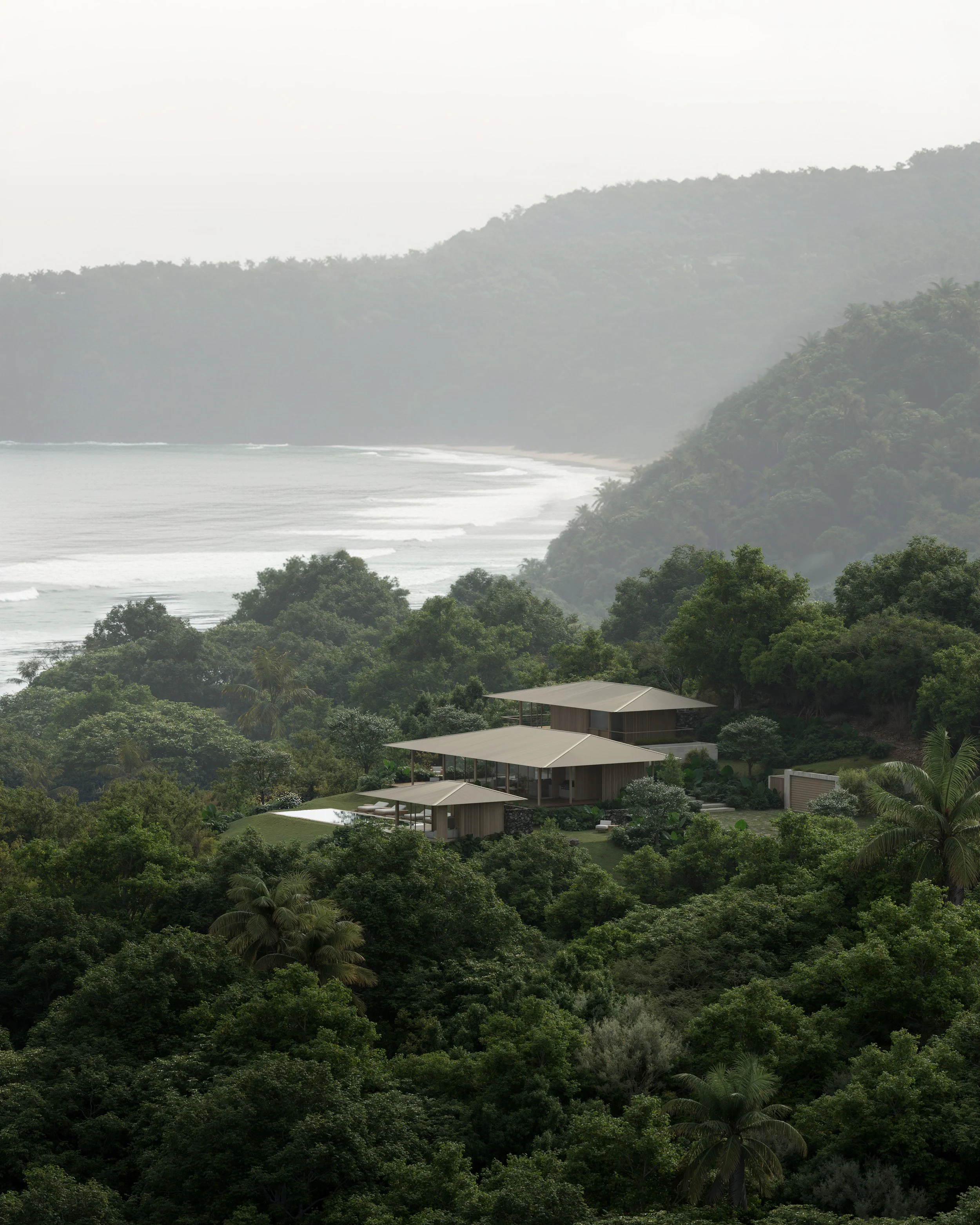
Kauhale Pu'ukumu is conceived as an architectural threshold, situated just above the Puʻukumu stream—the historic divider between the Koʻolau and Haleleʻa districts of Kauaʻi. The stream marks not only a boundary between moku (island districts), but also between ahupuaʻa, the traditional watershed-based land divisions that extend from mountain (mauka) to sea (makai). The home takes its name from this defining feature, acknowledging the Hawaiian understanding that ola i ka wai—water is life.
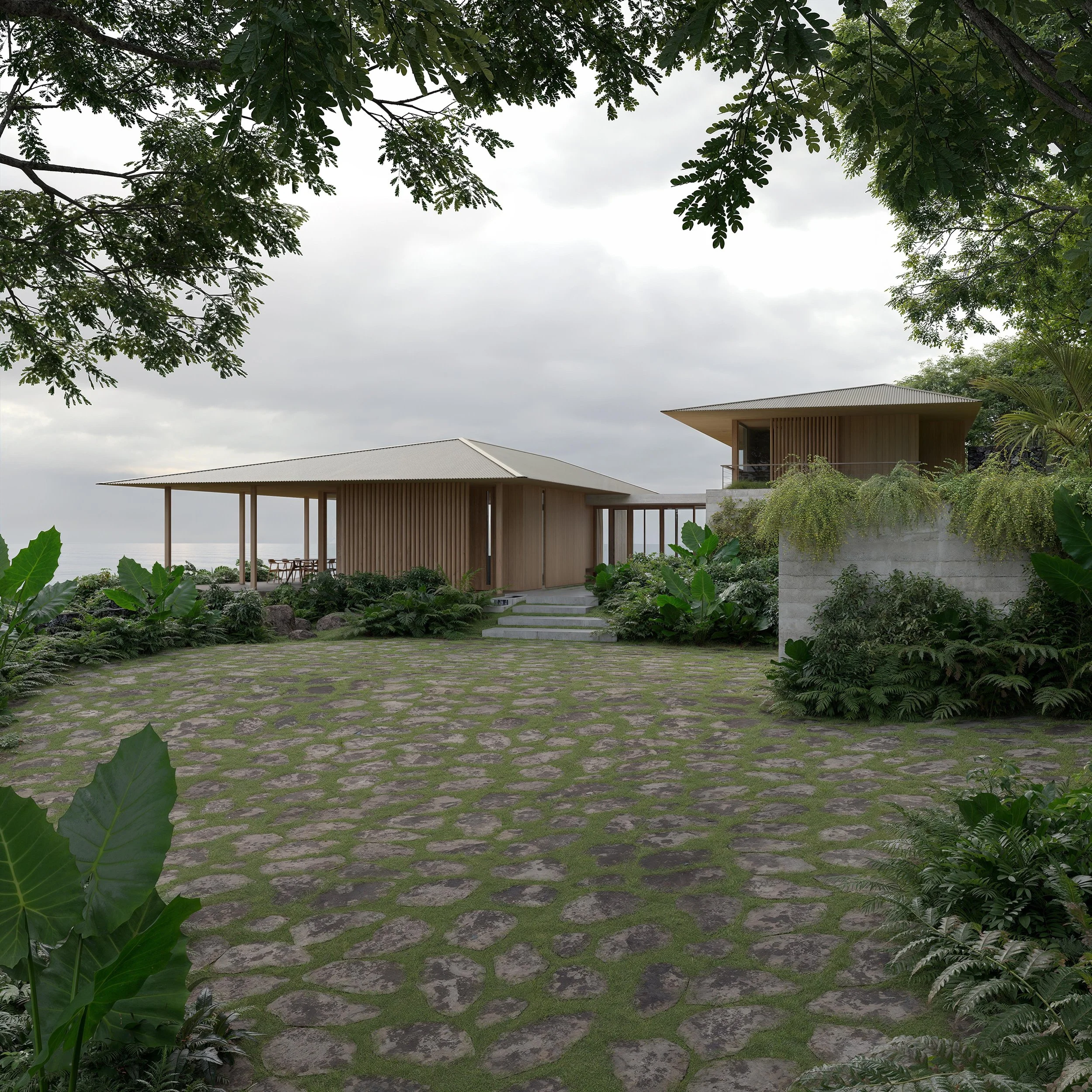
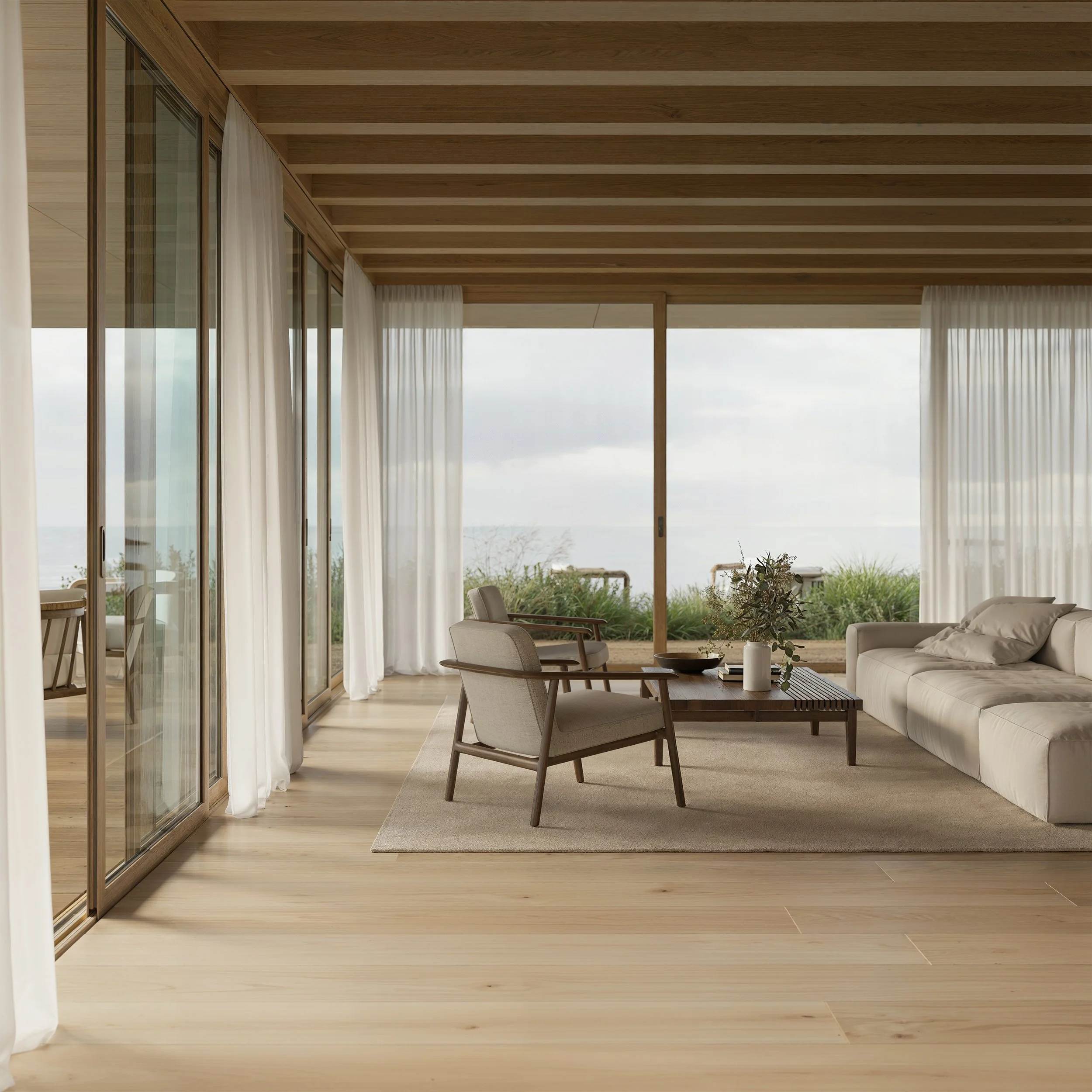
At this site, the stream separates two ahupuaʻa: Kalihiwai to the west, meaning “the water’s edge,” and Namahana to the east, meaning “the twins.” These ideas of edge, pairing, and balance inform the architecture. A linear water feature establishes a clear axis through the site and the home, organizing the plan into distinct yet connected realms. Public and communal spaces unfold toward Kalihiwai, while more private, inward-facing spaces align with Namahana. Movement across this axis is intentional, registering as a meaningful threshold rather than a neutral passage.
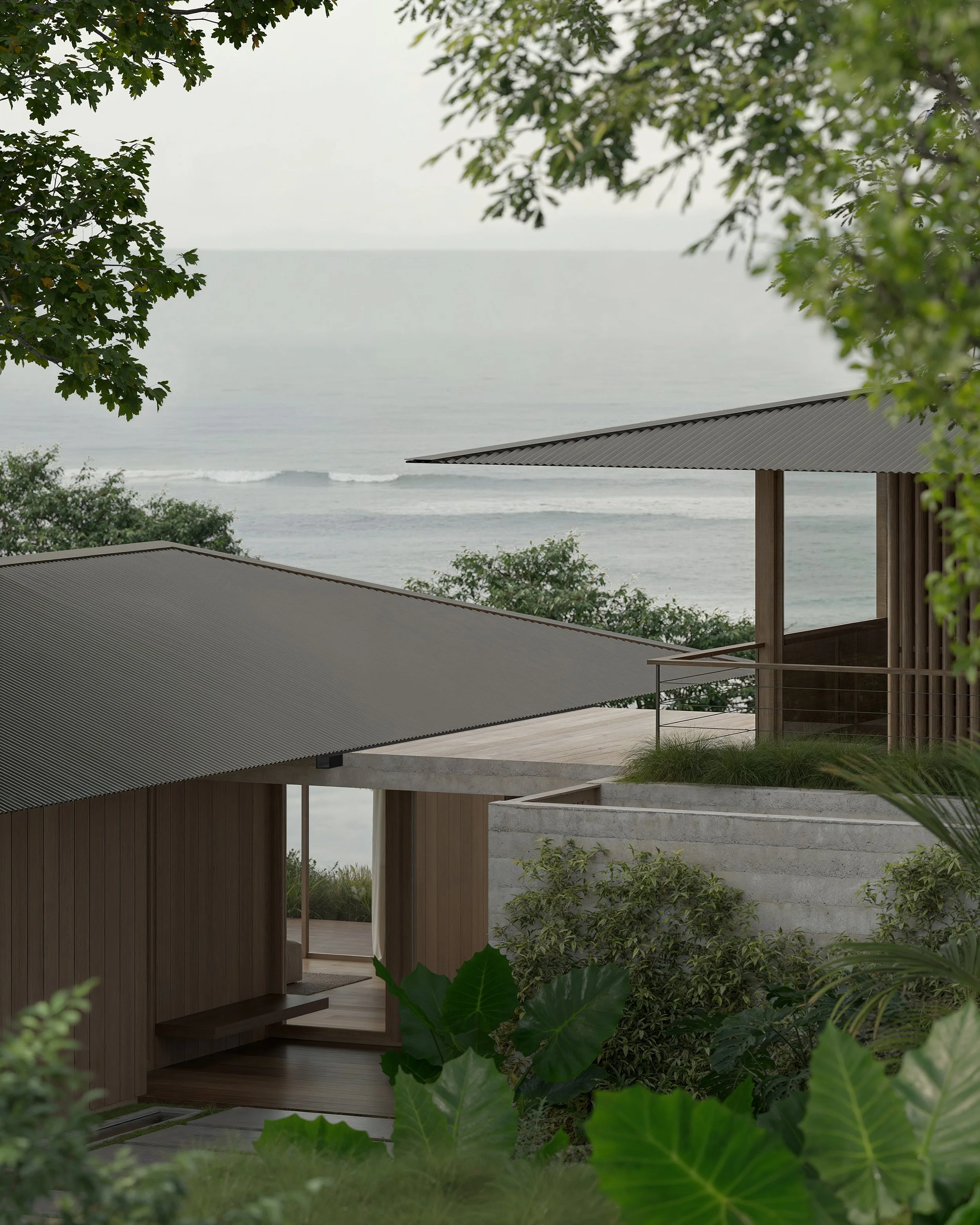
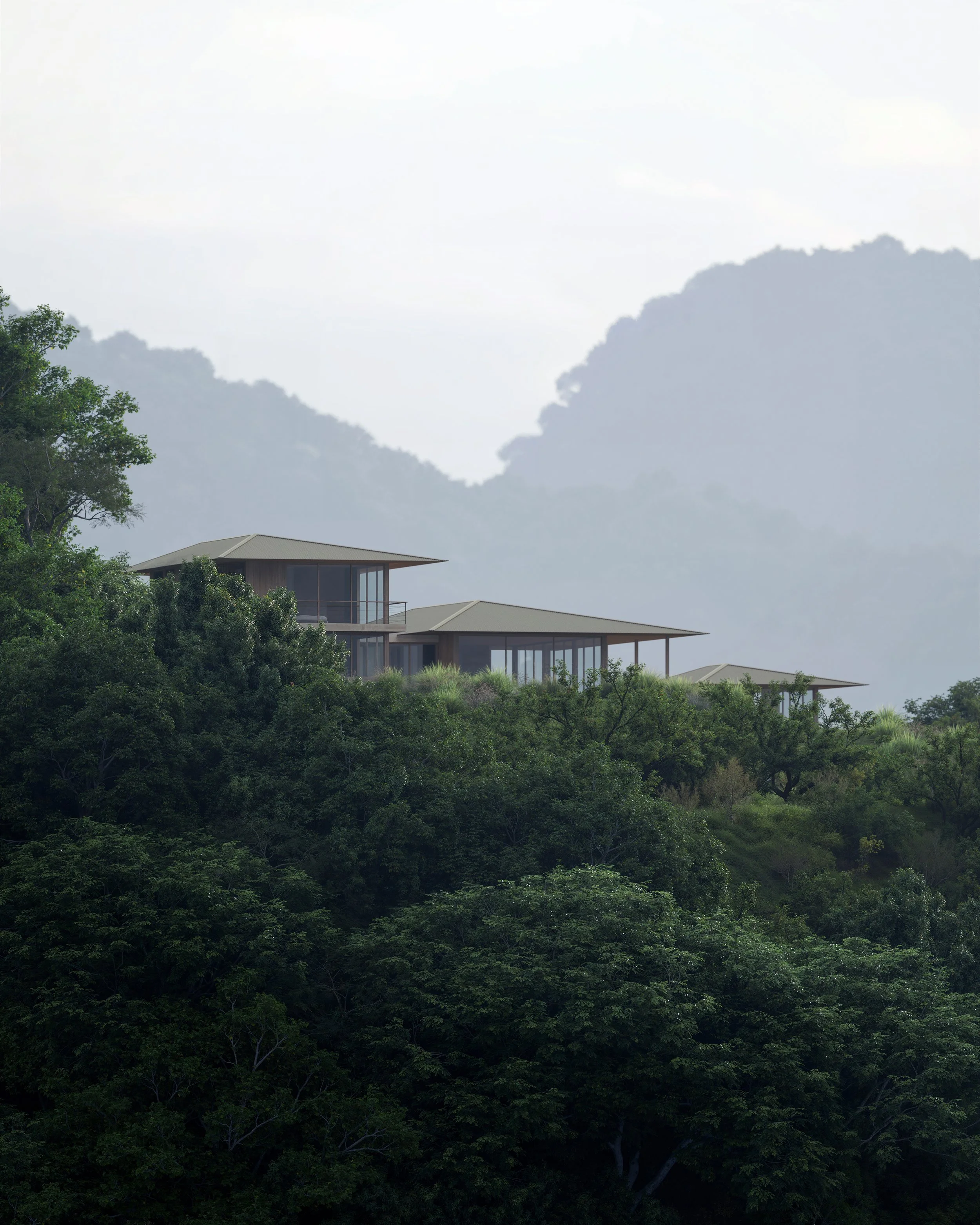
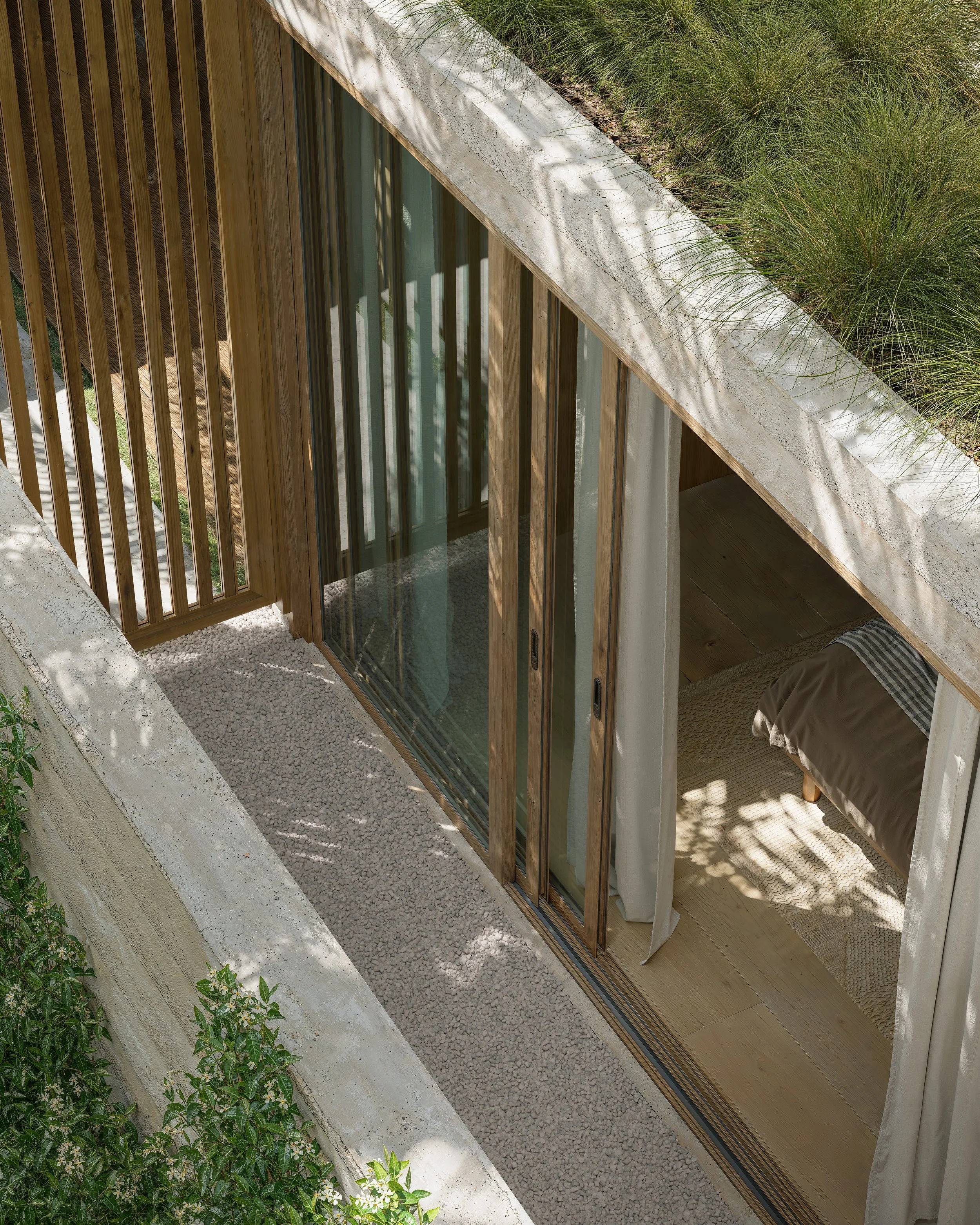
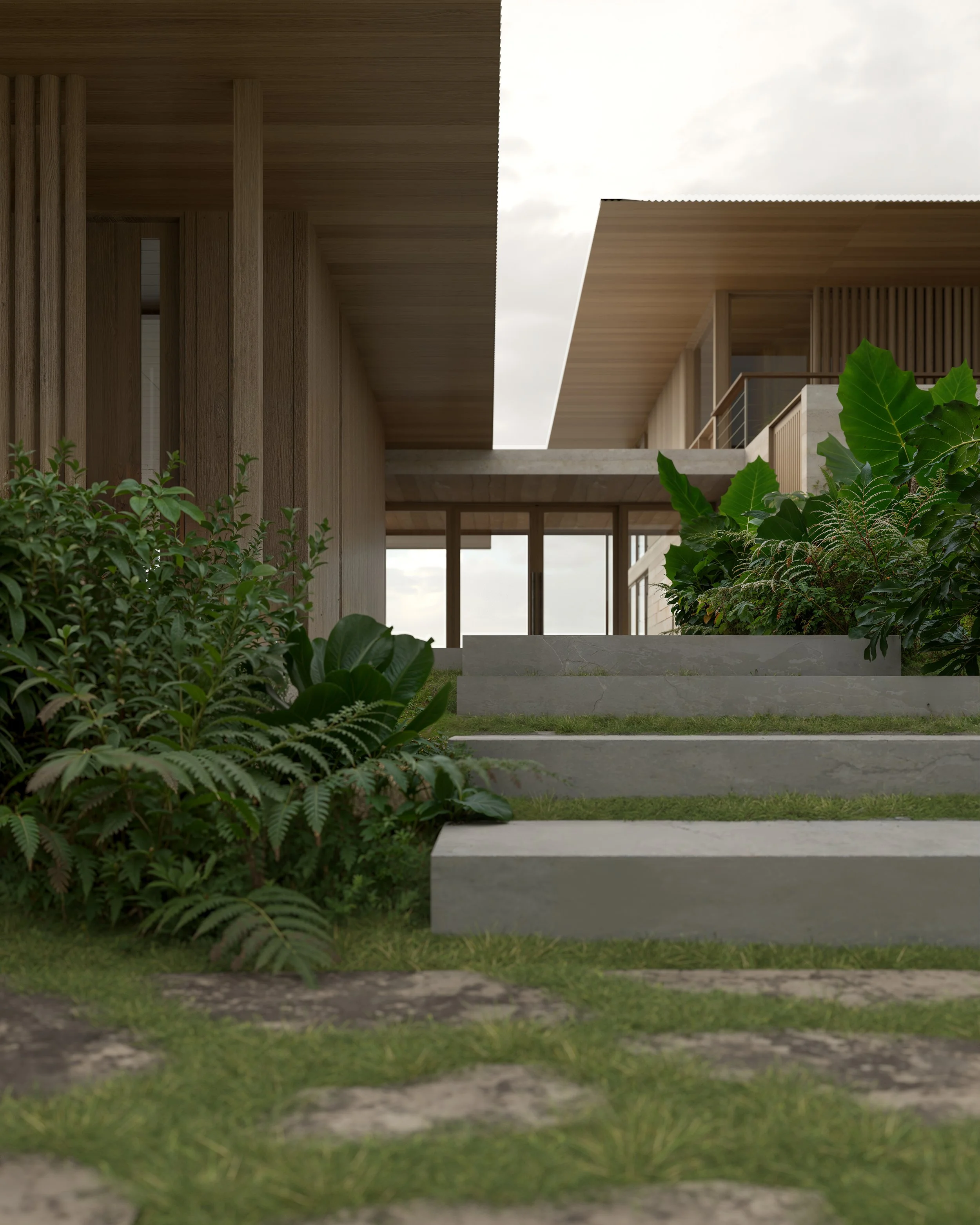
Material and tectonic expression balance grounding and lift. Board-formed concrete walls anchor portions of the home to the earth, reading as protective and enduring—an architectural nest embedded in the landscape. Rising from these grounded elements, roof forms extend and lift lightly, admitting breezes and filtered light beneath. This interplay of weight and buoyancy subtly references avian qualities of extension and poised movement, echoing the presence of the mōlī (Hawaiian albatross) and other birds that inhabit the site.
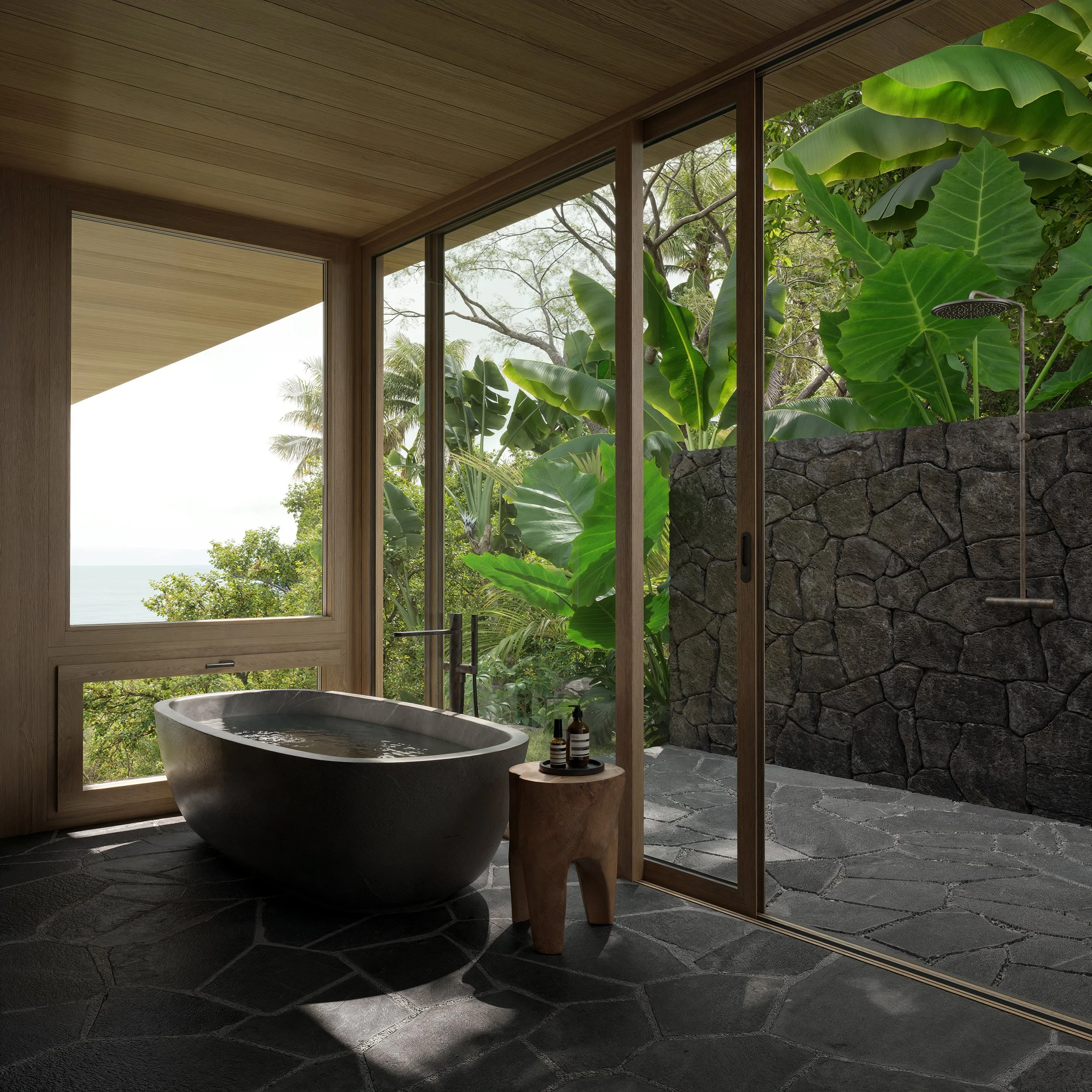
The surrounding landscape remains abundant and organic, with lauhala, lauaʻe ferns, and kalo reinforcing ecological continuity and cultural connection. Ultimately, the Puʻukumu House is an act of ulana—a weaving of geography, culture, ecology, and daily life—expressing balance between Koʻolau and Haleleʻa, Kalihiwai and Namahana, mauka and makai, ground and sky.